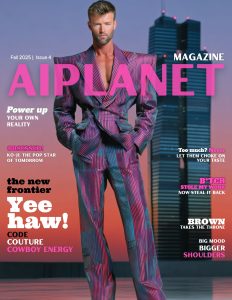
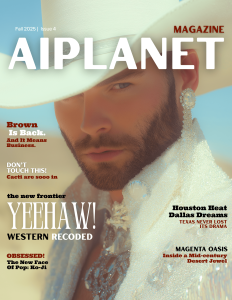
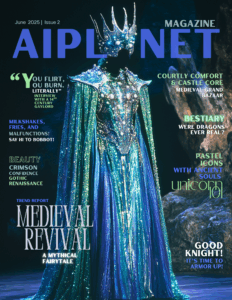
Why does so much AI art look the same — glittering pink dreamscapes on one side, grotesque shock imagery on the other? It’s as if the whole scene has split between beauty and chaos, polish and provocation. These extremes dominate the feed, competing for clicks and attention. Yet somewhere between them, beyond the glitter and the noise, originality still lives — quieter, riskier, and far more interesting.
The Pink Delirium
Every generation of art invents its own visual clichés, but few arrived as quickly — or as blindingly — as the AI era’s obsession with pink. You know the shade: that radioactive rose-gold hue that seems to coat everything from angelic cyborgs to bubblegum dystopias. It’s the signature palette of the AI dreamworld, where hyperfemininity meets chrome futurism, where every figure is lit like a perfume ad for the end of the world. This “pink delirium” — a fever dream of glitter, latex, iridescence, and lens flare — has become the unofficial uniform of generative aesthetics.
At first, it felt liberating. Finally, machines could visualize femininity and fantasy unbound by physics or budgets — an explosion of sensual surrealism that celebrated artifice. But the celebration metastasized into repetition. Scroll long enough, and everything begins to look like a single infinite moodboard: liquid metal gowns, pearl-slick hair, cosmic blush on translucent skin. What began as a rebellion against realism curdled into a new kind of conformity. Pink, once subversive, became predictable. And predictability, even when wrapped in glitter, dulls the senses.
In truth, these visuals say less about imagination and more about the aesthetics of virality. They are algorithm-friendly: shiny, immediate, emotionally legible at a glance. Their success is measured in likes and loops, not longevity. They please the feed but rarely haunt the mind. The irony is bitter — in the supposed age of infinite creative freedom, many creators have painted themselves into the same pink corner.
The Cult of Shock
If the pink world is built on beauty, its darker sibling thrives on revulsion. The second major current in AI art isn’t glittering at all — it’s grotesque. This is the realm of body horror, surreal disfigurement, and uncanny hybrids. It’s the “shock economy” of the machine age: where every image competes to disturb more deeply than the last. The goal is not to please but to provoke — to remind viewers that AI can trespass aesthetic boundaries once thought sacred.
At its best, this movement interrogates what the machine shouldn’t imagine. It touches on the uncanny tension between human fragility and algorithmic coldness. But more often, the grotesque becomes gimmick. Shock loses its philosophical charge and becomes a reflex — another way to grab attention in an oversaturated scroll. Like a horror film trailer that spoils its own mystery, much of AI’s grotesque imagery feels both loud and hollow, its transgression perfectly formatted for a square Instagram post.
And yet, you can see why artists chase it. Shock still cuts through the pink fog. It feels urgent, a middle finger to the aesthetic monotony. But when every creator is shouting, distortion becomes its own kind of wallpaper. The grotesque, like the glitter, becomes familiar. It loses its teeth. The real shock now might be subtlety — restraint, quietness, or the sincere expression of emotion without irony.
“Pink, once subversive, became predictable. And predictability, even when wrapped in glitter, dulls the senses.”
The Art of Being Original
In this twin empire of glitter and grotesque, being original is harder — but far from impossible. In fact, it might be easier to spot those who truly are. Originality in the AI age isn’t about inventing a new visual trick; it’s about cultivating an inner world that algorithms can’t predict. The most distinctive AI artists aren’t those who chase trends, but those who wrestle with them — who filter the machine’s endless possibilities through personal vision, context, and contradiction.
Being original today means daring to be uncool. It’s resisting the pink rush when everyone’s chasing gloss. It’s choosing ambiguity over shock. It’s remembering that what makes art endure is not the algorithm’s precision but the human impulse that resists it — the crooked line, the accidental blur, the decision to say something different instead of something viral.
There are artists doing this quietly, crafting visuals that feel lived-in, unpolished, emotionally strange. They use AI as a collaborator, not a vending machine. Their work may not explode on social media, but it lingers — it hums. It reminds us that originality isn’t a style but a stance: the courage to think slowly in a fast, glittery, overstimulated world.
So yes, in this AI universe of pink euphoria and digital grotesquerie, you can still be an original. But it takes a kind of stubbornness — the willingness to disappoint the algorithm, to confuse the audience, to make something that doesn’t fit the moment but might define the next one. In the end, that’s the only real rebellion left.