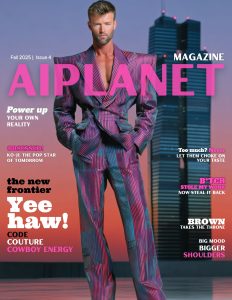
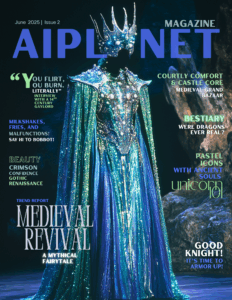
After years of quiet luxury and stealth wealth, fashion has made its decision. 2026 belongs to the shoulder, the neon, and the absolute refusal to be ignored. Meet Glamoratti — the breakout trend of the year.


Dress for dominance,
not just success
There is a name for what’s happening on the runways, in the street-style shots at Copenhagen Fashion Week, and in the Pinterest searches that have been climbing steadily since late 2024. It’s called Glamoratti — and if the data is anything to go by, it’s not a micro-moment. It’s a movement.
Pinterest named Glamoratti the breakout star of its annual Predicts 2026 report, and the numbers behind that headline are striking.

Why now? Why neon?
Pinterest’s 2026 trend forecasts flagged something that those of us who’ve been watching the catwalks already felt in our bones: the maximalist shoulder is back, and this time it’s wearing electric blue. The platform reported a surge in searches for “bold power dressing,” “80s suit aesthetic,” and “neon workwear” — a cultural appetite for visibility at a time when visibility feels like a radical act.
The 80s weren’t subtle, and neither is this moment. In an era of quiet luxury and stealth wealth, Glamoratti is making the counter-argument: that being seen is a form of power, not a liability. That the woman in the neon green blazer is not trying too hard — she’s trying exactly as hard as the situation demands.
The shoulder, revisited
Everything in this trend starts with the shoulder. Not the apologetically padded shoulder of the mid-2000s revival, not the soft drape of the last decade’s “relaxed tailoring” — but the full, unapologetic, architectural shoulder that says this person has arrived and has no intention of leaving quietly.
“Power glamour. That va-va-voom energy, but refined. It’s rooted in 80s excess, dialled all the way up, and cut to celebrate the female silhouette. Subtlety isn’t part of the brief.” — Grazia
What is Glamoratti, exactly?
At its core, Glamoratti is an 80s power revival with a modern filter. The defining elements: sculpted padded shoulders, funnel-neck blouses, tailored suits that claim space, metallic fabrics, and jewellery that has zero interest in being subtle. More is more. And then more again.
The foundations were laid decades ago. Designers like Thierry Mugler, Azzedine Alaïa, Gianni Versace, and Claude Montana shaped a visual language built on sharp tailoring, sculpted forms, and bodycon silhouettes. Women were dressed to command space, not blend in. That spirit was embodied by figures like Grace Jones, Joan Collins in Dynasty, and Madonna’s Blonde Ambition era.
Glamoratti doesn’t revive that era wholesale — it runs it through a 2026 lens. Less costume party, more main character energy. The construction is more refined, the cultural context more considered, but the intention is unchanged: to make the wearer feel, from the moment they put it on, that the room belongs to them.

THE COLORS
Electric Blue
The new boardroom black. Deep cobalt or LED cyan — the colour that says you’ve arrived without saying a word.


Green With Envy
The signature look. Envy green or citrus yellow — this is not a suit worn to fit in. Pair with slicked-back hair and neon (or gold) jewellery only.


Bubblegum Pink
This hue hits hard whether it is on velvet or glossy latex. Extra styling tip: wear a sleek, high ponytail to complement those shoulders.


Coral Meets Orange
Two vivid tones, one silhouette. Coral meets orange — anchored by architectural shoulders. Saint Laurent’s SS26 approach, translated.


Pinterest’s Glamoratti board, which has accumulated over 230 pins, tells the accessory story clearly: leather gloves stacked with bangles, lamé everything, oversized sunglasses, and the kind of statement earrings that end conversations. The platform explicitly described the jewellery direction as “chunkier, bolder, and golder” — and the SS26 runways delivered exactly that.
The brooch is also back, flagged as a specific Pinterest search spike. Worn on a lapel, layered on a coat, or stacked on a bag strap, it functions as the quiet power move within a loud aesthetic — the one detail that signals this look was entirely intentional.
Glamoratti, in the end, is about extravagance with intention. It is not chaos — it is choreography. The 80s gave fashion its boldest silhouettes and its most unapologetic colour palette. Glamoratti takes both, strips out the campness, and delivers them with a clarity that feels entirely of this moment. Success was always the floor. This is what comes next.